Zum Inhalt springen

Mitsubishi Tanabe Pharma America Presents New Results of RADICAVA ORS® (edaravone)

Mitsubishi Tanabe Pharma America, Inc. (MTPA) today announced new findings from two studies of RADICAVA ORS® (edaravone) presented at the Northeast Amyotrophic Lateral Sclerosis Consortium (NEALS) 2024 Annual Meeting. The company presented results from the MT-1186-A04 Study, a Phase 3b extension of the previously reported MT-1186-A02 study which explored the superiority of investigational once daily dosing versus the FDA-approved on/off regimen of RADICAVA ORS in people living with ALS. MTPA also shared results from primary and post-hoc analyses of RADICAVA ORS compared with Pooled Resource Open-Access ALS Clinical Trials (PRO-ACT) historical placebo controls, with evidence suggesting treatment with RADICAVA ORS increased survival outcomes and decreased physical function decline versus controls. Poster Presentation: Phase 3b Extension Study MT-1186-A04 to Evaluate the Continued Efficacy and Safety of Radicava ORS® (Oral Edaravone) for up to an Additional 48 Weeks in Patients with Amyotrophic… 
NfL-Assay: Ab sofort verfügbar und bestellbar

Der Neurofilament-Leichtketten-Assay, den Siemens Healthineers im Rahmen einer Kooperation mit Novartis entwickelt hat, ist ein In-vitro-Diagnostikum zur quantitativen Bestimmung der Neurofilament-Leichtkette (NfL) in Humanserum und -plasma (EDTA). Der Test ist auf dem Atellica IM Analyzer, ADVIA Centaur XP sowie dem ADVIA Centaur XPT System verwendbar. Der NfL-Assay dient in Verbindung mit klinischen, bildgebenden und Laborbefunden als Hilfsmittel zur Identifizierung schubförmiger Multipler Sklerose. Der Neurofilament-Leichtketten-Assay, den Siemens Healthineers im Rahmen einer Kooperation mit Novartis entwickelt, dient der Bestimmung und Quantifizierung der NfL-Konzentration in Humanserum und Plasma. NfL ist ein Biomarker, mit dem sich die Schädigung von Nervenzellen im Liquor und im Blut messen lässt. Veränderte NfL im Blut können mit verschiedenen schweren neurologischen Erkrankungen und deren Folgeschäden in Zusammenhang stehen. https://www.siemens-healthineers.com/de/laboratory-diagnostics/assays-by-diseases-conditions/neurologie/neurofilament-leichtketten-assay

Leukemia: New data from LLS first-of-its-kind master clinical trials

The Leukemia & Lymphoma Society (LLS) will present new data from its Beat AML® Master Clinical Trial and Pediatric Acute Leukemia (PedAL) Master Clinical Trial at the 66th American Society of Hematology (ASH) Annual Meeting and Exposition. The findings from LLS’s convened master clinical trials show great progress and are helping shape the treatment landscape for acute leukemias. Updated results show that more than half of a group of children with relapsed acute leukemias achieved remission after receiving a combination of treatments. Additional data indicate that IDH inhibitors as single agent or in combination with low-intensity therapies may be a viable treatment option for older adults with acute leukemias. LLS will also support its more than 150 funded researchers, as well as more than a dozen current and former LLS Therapy Acceleration Program® (TAP) biotech company partners, who will present… 

Candida parapsilosis:  growing threat for hospitalized patients

The yeast Candida parapsilosis is emerging as a growing threat for hospitalized patients in a new study. A team led by Dr Amelia Barber from the Cluster of Excellence „Balance of the Microverse“ at Friedrich Schiller University Jena and Dr Grit Walther from the National Reference Centre for Invasive Fungal Infections (NRZMyk) investigated an outbreak of multi-drug resistant hospital-acquired strain of this fungus. The researchers developed a new molecular detection method that can quickly and cost-effectively differentiate strains of C. parapsilosis. The results were published in The Lancet Microbe. Candida parapsilosis is a yeast fungus that can colonise the skin and digestive tract of humans and is usually harmless. However, it can cause severe wound and tissue infections, including life-threatening septicaemia, in people who are immunocompromised as a result of cancer or organ transplants or with serious medical conditions requiring… 

Trump nominiert Dr. Oz als CMS-Leiter für Medicare und Medicaid

Der designierte Präsident Donald Trump hat Dr. Mehmet Oz, einen Arzt, Fernsehstar und ehemaligen republikanischen Kandidaten für den Senat, für die Leitung von Medicare und Medicaid als Verwalter des CMS nominiert. „Amerika steht vor einer Gesundheitskrise und es gibt möglicherweise keinen Arzt, der qualifizierter und fähiger ist als Dr. Oz, um Amerika wieder gesund zu machen“, sagte Trump in seiner Ankündigung auf der Social-Media-Plattform Truth Social . Das CMS überwacht die Krankenversicherung von mehr als 160 Millionen Amerikanern, also rund der Hälfte der US-Bevölkerung, über Medicare, Medicaid, das Children’s Health Insurance Program und die Pläne des Affordable Care Act.

Intellektuelle Bescheidenheit macht Wissenschaftler vertrauenswürdig

Wenn Wissenschaftler die Grenzen ihres Wissens anerkennen, vertrauen Menschen ihnen mehr und folgen eher wissenschaftlichen Empfehlungen Ein internationales Team unter Leitung der Universität Pittsburgh und mit Beteiligung der Universität Wien hat Mechanismen zum Vertrauen in die Wissenschaft untersucht. Durch Umfragen und Online-Experimente konnten sie schließlich zeigen, dass „intellektuelle Bescheidenheit“ eine zentrale Rolle spielt. Damit meinen die Studienautor*innen etwa die Bereitschaft der Wissenschafter*innen, eigene Wissensgrenzen anzuerkennen und sich an neue, potenziell widersprüchliche Erkenntnisse anzupassen. Diese Bescheidenheit steigert laut der neuen Studie die Vertrauenswürdigkeit der Wissenschafter*innen in der Gesellschaft. Die Ergebnisse wurden aktuell im renommierten Fachmagazin Nature Human Behaviour veröffentlicht. Originalpublikation:Koetke, J., Schumann, K., Bowes, S. M., & Vaupoti?, N. (2024). The effect of seeing scientists as intellectually humble on trust in scientists and their research. Nature Human Behaviour.DOI: 10.1038/s41562-024-02060-x

Köln soll Hepatitis-frei werden

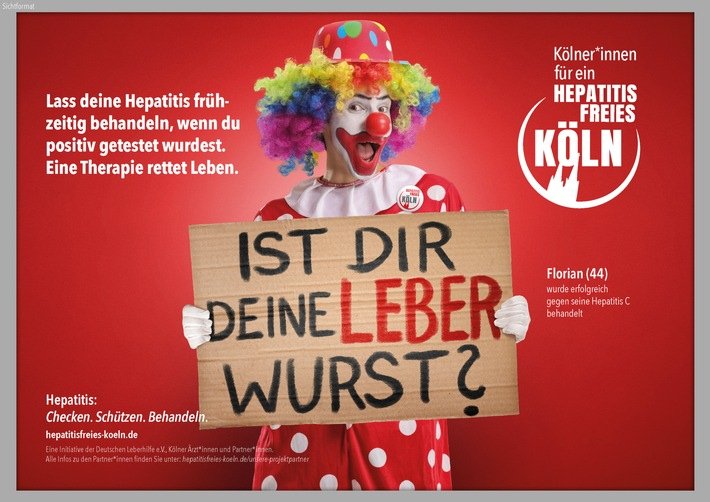
Die Deutsche Leberhilfe e.V. startet in Köln eine Plakataktion, die dem Thema Hepatitis mehr Aufmerksamkeit verschaffen soll. Zu den Unterstützern zählt auch das Pharmaunternehmen Gilead Sciences. Wer durch Köln streift, wird ab heute mit einer ungewöhnlichen Frage konfrontiert: ‚IST DIR DEINE LEBER WURST?‘ steht auf 80 Plakaten, die bis zum 25. November 2024 im Stadtgebiet aushängen – und dass man bei der Schreibweise ins Nachdenken kommt, ist natürlich Absicht. Denn mit diesem und weiteren Plakatmotiven weist die Deutsche Leberhilfe e.V. die Kölner Bevölkerung auf das Risiko für potenziell schwer verlaufende Infektionen der Leber mit Hepatitisviren hin. Die gute Nachricht: Gegen manche Hepatitisformen gibt es eine Impfung, andere lassen sich heute gut behandeln oder sogar heilen. Für eine Therapie müssen sie aber erst einmal erkannt werden. Die Deutsche Leberhilfe e.V. ruft daher auf, mit der Hausärztin oder dem Hausarzt über dieses… 

Neurodermitis bei Kindern: Welche Mythen wirklich stimmen

Bloß kein Kortison, dafür stillen und warten, bis es sich auswächst: Tipps und Mythen zu Neurodermitis bei Babys gibt es viele – doch was ist dran, und welche Ratschläge helfen wirklich? Die aktuelle Ausgabe des Apothekenmagazins „ELTERN“ zeigt, was richtig ist. So heißt es etwa häufig, Stillen beuge der Entstehung von Neurodermitis vor. Ob das stimmt, ist unklar. Empfohlen wird aufgrund vielerlei positiver Effekte, Babys in den ersten vier Lebensmonaten möglichst ausschließlich zu stillen. Denn Muttermilch enthält immunologisch wirksame Inhaltsstoffe, die das kindliche Immunsystem fördern. Es ist aber kein Garant, dass ein Kind keine Neurodermitis entwickelt. Noch eine Behauptung: Kortisonsalben seien für Kinder nicht geeignet – das stimmt aber nicht. Ist die Haut akut entzündet, kommen zusätzlich antientzündliche Cremes und Salben zum Einsatz. „Einige Eltern schrecken vor Kortisonsalben zurück, aber sie sind sehr effektiv gegen die Hautentzündung und damit auch… 

S&P Global Market Intelligence’s New Outlook Report Finds Enterprise Adoption of Generative Artificial Intelligence at an Inflection Point

S&P Global Market Intelligence has released a report today which shows the emergence of generative artificial intelligence (GenAI) is at an inflection point that has refocused enterprise priorities and stands to reshape the role of technology. The newly published Generative AI Outlook: From Hype to Value report is part of S&P Global Market Intelligence’s Big Picture 2025 Outlook Report Series. Key highlights from the report include: According to 451 Research’s recent Voice of the Enterprise: AI & Machine Learning, Infrastructure 2024 study, 18% of organizations currently report to have Generative AI fully integrated across their organization, a gain of 5 points in only 6 months.Results from the AI and Machine Learning (ML) study show that data quality ties with budget issues as the leading cause of AI project abandonment, followed by infrastructure performance. That’s an indication of the importance of… 

SAS forecasts AI reality over hype for health care and life sciences in 2025

As we approach 2025, the trajectory is clear: Health care and life sciences are steadily laying the groundwork for sustained transformation and innovation. There will be no sudden disruption, no major pivot, yet focused efforts to build agile, resilient organizations. SAS predicts the coming year will be defined by the continued integration of health systems, the modernization of technology, and the increasingly active role of patients and consumers in directing their care in industries shaped by regulation and public trust. Health care and life sciences experts from global data and AI leader SAS shared their thoughts on the current and future state of the industries. Want to take a deeper dive? Register for the SAS webinar: The Future of Health and Life Sciences: Top Trends in 2025 on Jan. 22, 2025. Targeted AI applications drive expanded AI usage. Health care…