Zum Inhalt springen

AI in medicine: the causality frontier

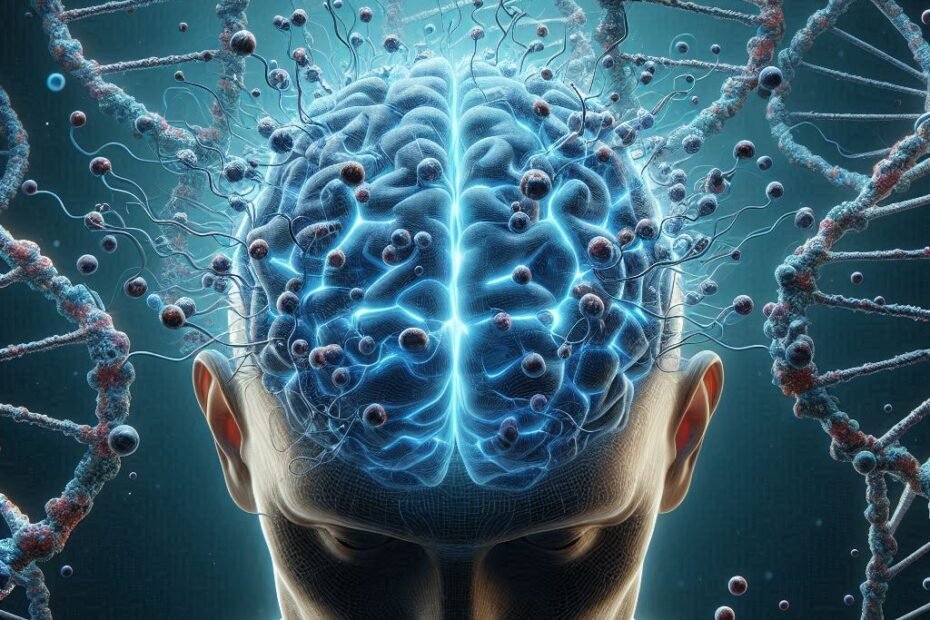
Machines can learn not only to make predictions, but also to handle causal relationships. An international research team shows how this could make therapies safer, more efficient, and more individualized. Artificial intelligence is making progress in the medical arena. When it comes to imaging techniques and the calculation of health risks, there is a plethora of AI methods in development and testing phases. Wherever it is a matter of recognizing patterns in large data volumes, it is expected that machines will bring great benefit to humanity. Following the classical model, the AI compares information against learned examples, draws conclusions, and makes extrapolations. Now an international team led by Professor Stefan Feuerriegel, Head of the Institute of Artificial Intelligence (AI) in Management at LMU, is exploring the potential of a comparatively new branch of AI for diagnostics and therapy. Can causal… 
Tool helps identify babies at high-risk for RSV

A new tool to identify infants most at risk for severe respiratory syncytial virus (RSV) illness could aid pediatricians in prioritizing children under 1 to receive a preventive medication before RSV season (October-April), according to Vanderbilt University Medical Center (VUMC) research published in Open Forum Infectious Diseases and to be presented at the American Thoracic Society 2024 International Conference.  Study authors considered factors including birth month, birth weight and whether an infant has siblings to determine who is most at risk of severe RSV illness and could benefit from the medication nirsevimab, commonly used as a preventive in newborns. “We developed a tool to identify babies at highest risk for a severe infection due to RSV,” said the study’s presenter Ferdinand Cacho, MD, pediatric pulmonology fellow in the Center for Asthma Research at VUMC. “RSV is a common respiratory infection that can cause fever, cough, runny… 

Antibiotic use in patients hospitalised with COVID-19 has no beneficial effect

Analysis of over 1,300 German adults hospitalised with moderate COVID-19 finds treatment with antibiotics was associated with five times greater likelihood of COVID-19 deterioration compared to patients not given antibiotics. To explore this further, Dr Friedrichs and colleagues analysed data on 1,317 hospitalised adults (median age 59 years; 38% women) with confirmed SARS-CoV-2 infection between March 2020 and May 2023 from the German National Pandemic Cohort Network (NAPKON), which includes patients from various hospitals across Germany who were hospitalised with a positive SARS-CoV-2 PCR test. Using the WHO Clinical Progression Scale [1], they identified 1,149 patients who were classified as having moderate disease (WHO score 4-5), of whom 467 (41%) were treated with antibiotics commonly used for respiratory infections such as ß-Lactam-antibiotics, macrolides, or moxifloxacin during their hospital stay. A further 168 patients were classed as having severe disease (WHO… 

Many immigrants in Canada get Multiple Sclerosis (MS)

Immigrants to Canada who have spent a greater proportion of their lives in Canada have a greater risk of developing multiple sclerosis (MS) than people who have spent a smaller proportion of their lives there, according to a study published in the April 24, 2024, online issue of Neurology®, the medical journal of the American Academy of Neurology. The study does not prove that an increased proportion of life in Canada causes MS; it only shows an association. “Other studies have shown that immigrants tend to have better health than long-term residents, which is thought to be because healthy people are more likely to choose to immigrate,” said study author Manav V. Vyas, MBBS, MSc, PhD, of St. Michael’s Hospital in Toronto, Canada and a member of the American Academy of Neurology. “We wanted to see if the lower risk of MS declines… 

AI improves diagnosis of Mendelian disorders

Diagnosing rare Mendelian disorders is a labor-intensive task, even for experienced geneticists. Investigators at Baylor College of Medicine are trying to make the process more efficient using artificial intelligence. The team developed a machine learning system called AI-MARRVEL (AIM) to help prioritize potentially causative variants for Mendelian disorders. The study is published today in NEJM AI.  Researchers from the Baylor Genetics clinical diagnostic laboratory noted that AIM’s module can contribute to predictions independent of clinical knowledge of the gene of interest, helping to advance the discovery of novel disease mechanisms. “The diagnostic rate for rare genetic disorders is only about 30%, and on average, it is six years from the time of symptom onset to diagnosis. There is an urgent need for new approaches to enhance the speed and accuracy of diagnosis,” said co-corresponding author Dr. Pengfei Liu, associate professor of molecular… 

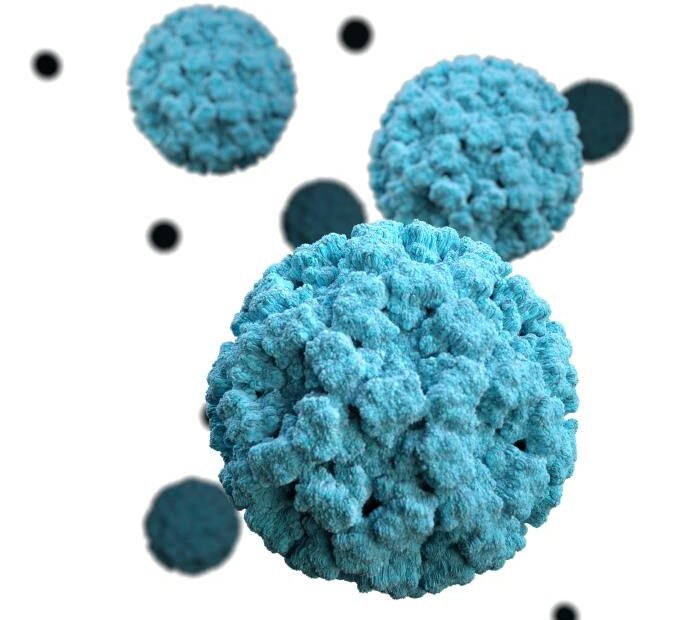
Norovirus. Credits: CDC

DGKL informiert über Norovirus

(www.dgkl.de) Der aktuelle Ausbruch des Norovirus in Deutschland beschäftigt Menschen und Medien gleichermaßen – wir haben die wichtigsten Fakten für Sie zusammengestellt. Das Virus: Das Norovirus ist nicht nur in Deutschland eine häufige Ursache für gastrointestinale Erkrankungen, die zu Symptomen wie Erbrechen, Durchfall und Übelkeit führen. Diese Viren sind hochansteckend und verbreiten sich rasch, insbesondere in Gemeinschaftseinrichtungen wie Krankenhäusern und Altenheimen. Aktuelle Situation: In jüngster Zeit wurde ein Anstieg der Norovirus-Fälle in Deutschland verzeichnet. Besonders betroffen ist das Bundesland Nordrhein-Westfalen, wo im Ruhrgebiet ein Hotspot identifiziert wurde. Ein kürzlich stattgefundenes Frühlingsfest in Stuttgart führte zu einem Ausbruch, bei dem über 700 Personen erkrankten, und das Virus wurde durch Laboruntersuchungen bestätigt. Statistische Daten: Laut Statista wurden im Jahr 2022 insgesamt 68.956 Fälle von Norovirus in Deutschland registriert. Diese Zahl zeigt einen Rückgang im Vergleich zu den Vorjahren, was teilweise auf die… 

mRNA Mutation löst Alzheimer aus

Ein Forschungsteam der Johannes Gutenberg-Universität Mainz (JGU) hat einen Mechanismus entdeckt, wie es bei Alzheimer-Patienten zu einem Versagen der Mitochondrien kommt und damit zu einer reduzierten Versorgung des Gehirns mit Energie. „Es handelt sich hierbei um einen Effekt, der durch eine RNA-Modifikation vermittelt wird und der bisher unbekannt war“, teilt Prof. Dr. Kristina Friedland vom Institut für Pharmazeutische und Biomedizinische Wissenschaften der JGU dazu mit. „Kraftwerk der Zelle“ von Funktionsstörung betroffen Mitochondrien, auch die „Kraftwerke der Zelle“ genannt, sind Organellen im Innern der Zellen, die im gesamten Körper, besonders aber im Gehirn für die Bereitstellung von Energie sorgen. So ist das Gehirn für seinen Energiebedarf zu 95 Prozent auf die Verstoffwechslung von Glucose in den Mitochondrien angewiesen. Seit Langem ist bekannt, dass bei der Alzheimer-Demenz die Glukose-Verstoffwechslung schon früh im Krankheitsprozess beeinträchtigt ist. Dem liegt eine Funktionsstörung der Mitochondrien zugrunde,… 

Blockchain in Healthcare Market

Allied Market Research has recently published a research study titled „Blockchain in Healthcare Market: Global Outlook and Forecast 2023-2032.“ This comprehensive study offers a thorough analysis of market risks, identifies lucrative opportunities, and provides strategic and tactical decision-making support for the period spanning 2023 to 2032. The market analysis is segmented by key regions that are propelling the marketization process. The report offers valuable insights into the research and development landscape, growth catalysts, and the evolving investment framework of the Global Blockchain in Healthcare Market. Furthermore, the study profiles a range of key market players, including Akiri, Avaneer Health, BurstIQ, Crystalchain, Change Healthcare, Chronicled, Equideum Health, Embleema, Farma Trust, Guardtime, Hashed Health, International Business Machines (IBM), iSolve, Medical Chain, Oracle, Patientory, and Proof.Works. Blockchain in Healthcare Market Statistics: The blockchain technology in healthcare market was valued at $531.19 million in… 

Vitamin D fördert Immunresistenz gegen Krebs

Forscher des Francis Crick Institute, des National Cancer Institute (NCI) der US National Institutes of Health (NIH) und der Universität Aalborg in Dänemark haben herausgefunden, dass Vitamin D das Wachstum einer Art von Darmbakterien bei Mäusen fördert, die die Immunität gegen verbessern Krebs. Wie heute in „Science“ berichtet wurde , stellten die Forscher fest, dass Mäuse, denen eine Vitamin-D-reiche Ernährung verabreicht wurde, eine bessere Immunresistenz gegen experimentell transplantierte Krebsarten aufwiesen und besser auf eine Immuntherapie ansprachen. Dieser Effekt wurde auch beobachtet, als durch Gen-Editierung ein Protein entfernt wurde, das an Vitamin D im Blut bindet und es vom Gewebe fernhält. Überraschenderweise stellte das Team fest, dass Vitamin D auf Epithelzellen im Darm wirkt, die wiederum die Menge eines Bakteriums namens Bacteroides fragilis erhöhen . Diese Mikrobe verlieh Mäusen eine bessere Immunität gegen Krebs, da die transplantierten Tumore nicht so stark… 

Caliway Announced CBL-514 Phase 2 Study for Cellulite Treatment

CBL-514 is the first product to treat cellulite at the raised areas. Currently, there is no effective and safe cellulite treatment on the market. The global market for cellulite treatment is estimated to expand to $7.37 billion in 2034. CBL-0201EFP Phase 2 study demonstrated CBL-514 statistically significant efficacy in reducing cellulite severity scores at 4 and 12 weeks after treatment. Over 50% of participants experienced at least one level of improvement in cellulite severity 12 weeks after the final CBL-514 treatment evaluating with the modified Hexsel Cellulite Severity Scale among 4 levels of severity. CBL-514 is under development for multiple indications, including Cellulite, Local Fat Reduction (currently in Phase 2b), and Durum’s disease (currently in Phase 2), which brought Caliway the Fast Track Designation and the Orphan Drug Designation by the FDA in Feb. 2024. https://clinicaltrials.gov/study/NCT05632926