Zum Inhalt springen

Luzerner Kantonsspital (LUKS) revolutioniert Dienstplanung mithilfe künstlicher Intelligenz

Zürich (ots) – Das Kantonsspital Luzern (LUKS) leistet mit Microsoft Schweiz und Polypoint Pionierarbeit bei KI-basierter Dienstplanung und kann den Planungsaufwand so um zwei Drittel reduzieren. Mit seiner Best Practice Initiative ist das LUKS Vorreiter im Schweizer Gesundheitswesen und trägt durch eine effizientere Dienstplanung zu mehr Effizienz und einer besseren Patientenversorgung bei. Das Luzerner Kantonsspital […] Luzerner Kantonsspital (LUKS) revolutioniert Dienstplanung mithilfe künstlicher Intelligenz

Cidara Therapeutics Announces Reverse Stock Split

SAN DIEGO, April 22, 2024 (GLOBE NEWSWIRE) — Cidara Therapeutics, Inc. (Nasdaq: CDTX) (the Company), a biotechnology company using its proprietary Cloudbreak® platform to develop drug-Fc conjugate (DFC) immunotherapies designed to save lives and improve the standard of care for patients facing serious diseases, today announced that the Company effected a reverse stock split of its issued and outstanding common stock, at a ratio of 1-for-20. The effective time of the reverse stock split will be 5 p.m. ET on April 23, 2024. The Company’s common stock will begin trading on a split-adjusted basis commencing upon market open on April 24, 2024. Cidara Therapeutics Announces Reverse Stock Split

Report of transactions of shares and related securities of Bavarian Nordic

COPENHAGEN, Denmark, April 22, 2024 – Bavarian Nordic A/S (OMX: BAVA) has today received information about the following transactions of the company’s shares/related securities by persons holding managerial responsibilities and/or persons/companies closely associated with such. Report of transactions of shares and related securities of Bavarian Nordic by persons holding managerial responsibilities and/or persons/companies closely associated with such

Anlässlich des Welttags des Labors fordert der Präsident der Deutschen Gesellschaft für klinische Chemie und Labormedizin (DGKL), Harald Renz, den Einsatz der medizinischen KI für die bessere Erstellung von Diagnosen und Therapien

DGKL setzt auf medizinische KI in der Diagnostik

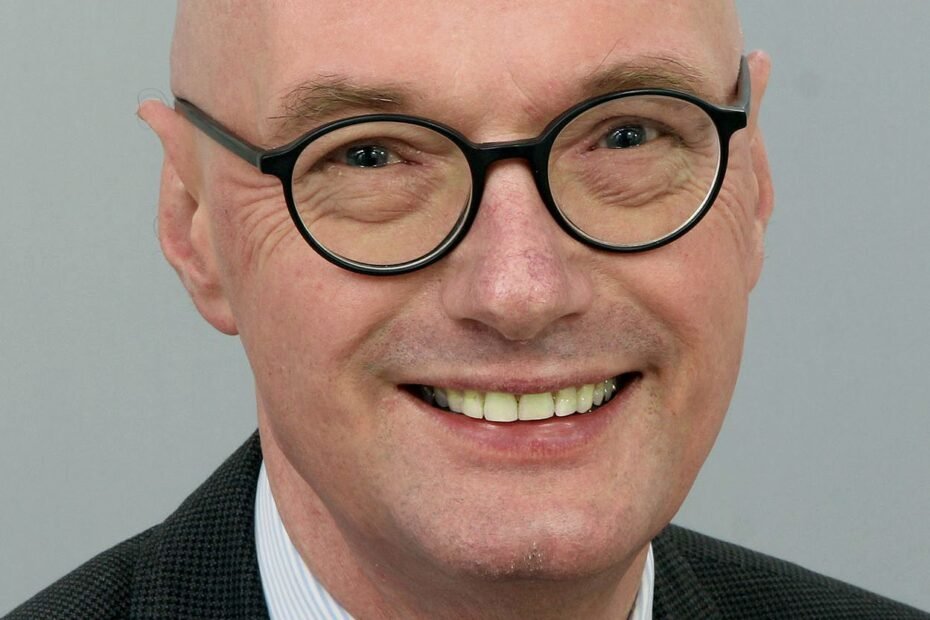
(DGKL News) Anlässlich des Welttags des Labors fordert der Präsident der Deutschen Gesellschaft für klinische Chemie und Labormedizin (DGKL), Harald Renz, den Einsatz der medizinischen KI für die bessere Erstellung von Diagnosen und Therapien – und bietet Bundesgesundheitsminister Karl Lauterbach (SPD) Hilfe beim Thema Präventionsdiagnostik an. Der Mediziner Renz ist Direktor sowie Professor am Institut für Labormedizin und Pathobiochemie, Molekulare Diagnostik der Philipps Universität Marburg. DGKL News: Herr Prof. Renz, Hand aufs Herz: Wann haben Sie sich zum letzten Mal freiwillig die Blutwerte bestimmen lassen? Renz: Ich persönlich mache regelmäßig, rund einmal im Jahr, einen Labor-Checkup. Auf väterlicher Seite gibt es ein erhöhtes Risiko für Herz-Kreislauferkrankungen, auf mütterlicher Seite für Krebserkrankungen. Und jetzt mit 63 Jahren kommt man in eine Altersgruppe mit erhöhtem Risiko. Seit Jahren mache ich intermittierendes Fasten – und auch das muss kontrolliert sein. DGKL News: Jedenfalls… 

DGKL bietet Lauterbach Zusammenarbeit an

Anlässlich des heuten Welttages des Labors bietet die Deutsche Gesellschaft für Klinische Chemie und Laboratoriumsmedizin e.V. (DGKL) Bundesgesundheitsminister Karl Lauterbach (SPD) die Zusammenarbeit bei der Bekämpfung künftiger Pandemien an. Ein Management der Corona-Pandemie ohne die Labormedizin wäre „unvorstellbar“ gewesen, so DGKL-Präsident Harald Renz in einem Interview. Die Bedeutung der Labormedizin würde gleichwohl weiterhin unterschätzt, sie erhalte nicht den Stellenwert, den sie verdient. An den Bundesminister gewandt betont Renz: „Selbstverständlich stehen wir jederzeit für Gespräche zur Verfügung.“ Auch bei künftigen Pandemien sei man bereit, sich den Herausforderungen zu stellen. Die hohe Leistungsfähigkeit der Labormedizin beruht auf einem hohen Grand an Automatisierung und Digitalisierung. Bei der Vielzahl an Daten und Möglichkeiten, die die moderne Labormedizin liefert, brauche es „einen Lotsen durch das System“, so Renz. Dabei könne er sich „aber auch vorstellen, dass KI-basierte Algorithmen hier zukünftig noch weiter unterstützen können.“ Nach… 

Smartphone swabs provide convenient toxicology testing

Dry swabs can be successfully used to detect drugs on smartphone surfaces, study shows. A simple and convenient method to collect drug use data from the surface of a smartphone is revealed for the first time in a new study published in De Gruyter’s Clinical Chemistry and Laboratory Medicine. By helping clinicians understand what drugs people are taking in certain contexts, the research could protect public health and improve the treatment of patients suspected of overdosing. Dr. Théo Willeman of Grenoble Alpes University Hospital, France and colleagues explored whether one of our most handled objects – the smartphone – could be a more convenient way to track drug use. Fingerprints on a phone’s surface contain sweat and sebum that can reveal the presence of drugs, and the surface itself can retain traces of any drugs consumed directly from it. The… 

KI kann Erreger unterscheiden

Künstliche Intelligenz hilft bei der Diagnose: Was ist der Grund für eine Entzündung und wie lässt sie sich bekämpfen? Eine neue Anwendung künstlicher Intelligenz (KI) unterscheidet Infektionen nach ihrer Verursachung durch Bakterien, Viren oder andere Faktoren. Ein Forschungsteam der Philipps-Universität Marburg berichtet im Fachblatt „Frontiers in Immunology“ über das selbstentwickelte Verfahren. Die Autorinnen und Autoren der Studie nutzten eine Kombination einfacher Bluttests und entwickelten eine KI, die zwischen bakteriellen Infektionen, viralen Virusinfektionen und Autoimmunerkrankungen unterscheiden kann. Die Forschungsgruppe analysierte Blut von 80 Patientinnen und Patienten mit entzündlichen Erkrankungen und verglich die Ergebnisse mit denen von 38 Kontrollpersonen ohne Entzündung. Aufgrund der Blutproben konnte eine zweistufige KI-Anwendung diese beiden Gruppen auseinanderhalten. Die Künstliche Intelligenz unterscheidet außerdem zwischen verschiedenen Arten von Entzündungen“, berichtet Thrun: Bakterielle Infektionen, Virusinfektionen und Autoimmunerkrankungen werden mit einer Genauigkeit von 90,3 Prozent, 80,0 bzw. 79,0 Prozent erkannt. „Sobald… 

Oral anticancer drug to treat triple-negative breast cancer

Hyundai Bioscience (KOSDAQ 048410) announced the positive results from its preclinical study on triple-negative breast cancer, investigating combination therapy of ‚Niclosamide-based oral anti-cancer drug‘ jointly developed with CNPharm and Docetaxel, one of widely-used chemical anticancer agents. As a result, the combination therapy was found to be more effective than Docetaxel alone. The anti-cancer efficacy of the combination therapy group was 67% better than the Docetaxel-treated group. From the in vitro test, Niclosamide successfully inhibited the proliferation and survival of cancer cells by disrupting their metabolism, preventing the anticancer drug-resistance by blocking the cell signaling pathways of tumor cells and recurrence and metastasis of cancer by inhibiting cancer stem cells. Niclosamide is found to be an antitumor agent that blocks metabolism, and Niclosamide-based anticancer drugs can solve the resistance and metastasis problems simultaneously. Due to its anticancer mechanism, Niclosamide is effective… 

First bio-data line: Federal Chancellor Scholz takes the „touch test“

German Chancellor Olaf Scholz, accompanied by Norwegian Prime Minister Jonas Gahr Støre, learnt about the innovations of the Stuttgart-based global market leader for integrated solutions and branded products in the field of cable and connection technology. Matthias Lapp, CEO of the Lapp Group, presented the first ETHERLINE® FD bioP Cat.5e data cable, which consists of a partially bio-based sheath material based on corn, to the Federal Chancellor as a highlight. The special thing about it is that previous data cables only had cable sheaths made of plastic. The new, sustainable version with a bio-based outer sheath consists of 43 per cent renewable raw materials. This reduces the carbon footprint by 24 per cent compared to the fossil-based jacket. Matthias Lapp presented the organic version of the cable to the two politicians. „Feel it, this is what an organic sheath feels…