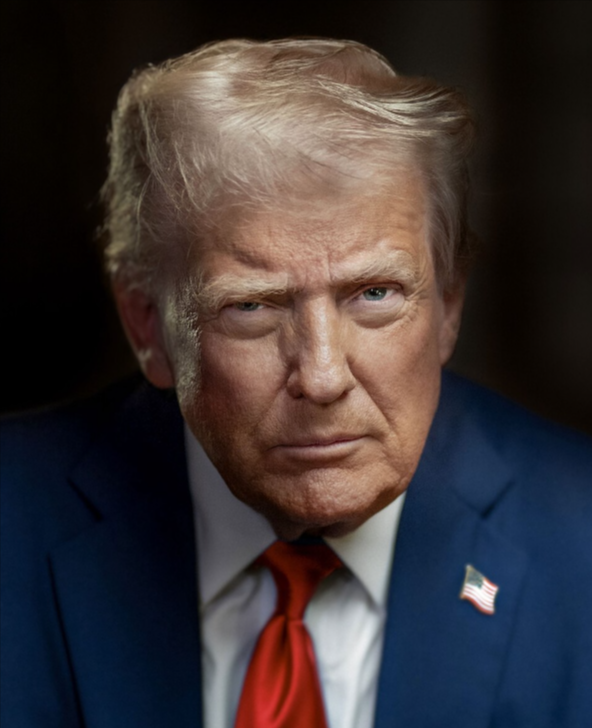
The war against Iran has not weakened the Islamic Revolutionary Guard Corps (IRGC). On the contrary, it has significantly strengthened the organisation both politically and militarily. Donald Trump’s 14-point plan, presented after the ceasefire, is in essence an admission of strategic defeat. All the core US demands – no nuclear weapon, no regional destabilisation, no support for proxy militias – could have been negotiated without military escalation and without the closure of the Strait of Hormuz. The conflict has instead consolidated the very force Washington sought to contain.
The IRGC entered the confrontation as a powerful but domestically contested actor. It emerged as the undisputed defender of Iranian sovereignty. The direct US strikes on Iranian territory triggered a wave of national unity that even critics of the regime found hard to resist. The Guard’s rapid and effective response – including the temporary closure of the Strait of Hormuz and precise missile strikes on US assets – reinforced its image as the protector of the nation. In the eyes of many Iranians, the IRGC proved it could stand up to the world’s strongest military power. That narrative is now deeply embedded in Iranian public consciousness.
Trump’s 14-point plan reads like a belated attempt to salvage a diplomatic outcome that could have been pursued from the outset. The demands are not new. They largely mirror positions the US had already articulated before the strikes. The difference is that they are now presented after a costly and ultimately inconclusive military campaign. The plan contains no credible mechanism to enforce compliance beyond the threat of renewed force – a threat that has lost much of its credibility after the recent fighting.
The conflict has also had the opposite effect on Iran’s nuclear programme. While Tehran has not crossed the threshold to weaponisation, it has accelerated uranium enrichment and reduced cooperation with the International Atomic Energy Agency. The IRGC, which controls key elements of the nuclear infrastructure, has gained even greater influence over strategic decisions. Far from being marginalised, the Guard is now more deeply entrenched in Iran’s security and economic architecture than before the war.
From a regional perspective, the outcome is equally sobering for the United States. Saudi Arabia and other Gulf states have quietly signalled that they do not want further escalation. The Abraham Accords have been put on hold. Israel, despite its tactical successes, finds itself diplomatically more isolated. The IRGC, by contrast, has strengthened its ties with allied militias across the region and demonstrated its ability to project power beyond Iran’s borders.
The Trump administration’s decision to launch direct strikes may have been intended as a show of strength. In reality, it has handed the IRGC a strategic victory. The Guard has gained legitimacy at home, expanded its influence over national policy, and shown that it can survive even direct confrontation with the United States. The 14-point plan does not change that fundamental reality. It merely confirms that the military route has led to a dead end.
The United States now faces the difficult task of rebuilding a credible Iran policy on the ruins of a failed military gamble. The IRGC, meanwhile, stands stronger than ever. The war has not brought Iran to its knees. It has reinforced the very centre of power that Washington once hoped to break.